The Æsir
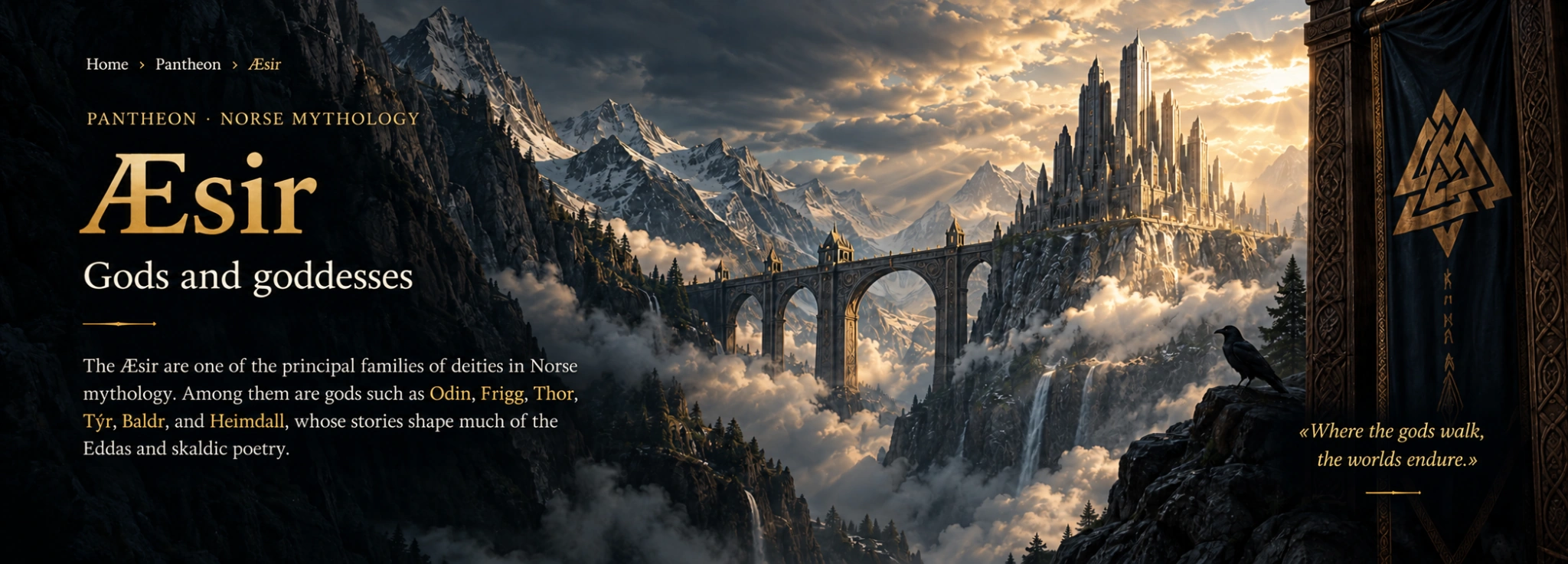
The Æsir are one of the principal families of deities in Norse mythology. Their number includes figures such as Odin, Frigg, Thor, Týr, Baldr and Heimdall, whose stories occupy much of the Eddas and the skaldic poetry that preserved the ancient traditions of northern Europe.
Their home is Asgard, one of the worlds held by Yggdrasil, while Midgard is the realm of human beings.
The Æsir are closely associated with sovereignty, war, protection, oaths, knowledge, fate and the preservation of order, although every deity has an identity of their own and the boundaries between their roles are rarely absolute.
Nor are they an isolated family.
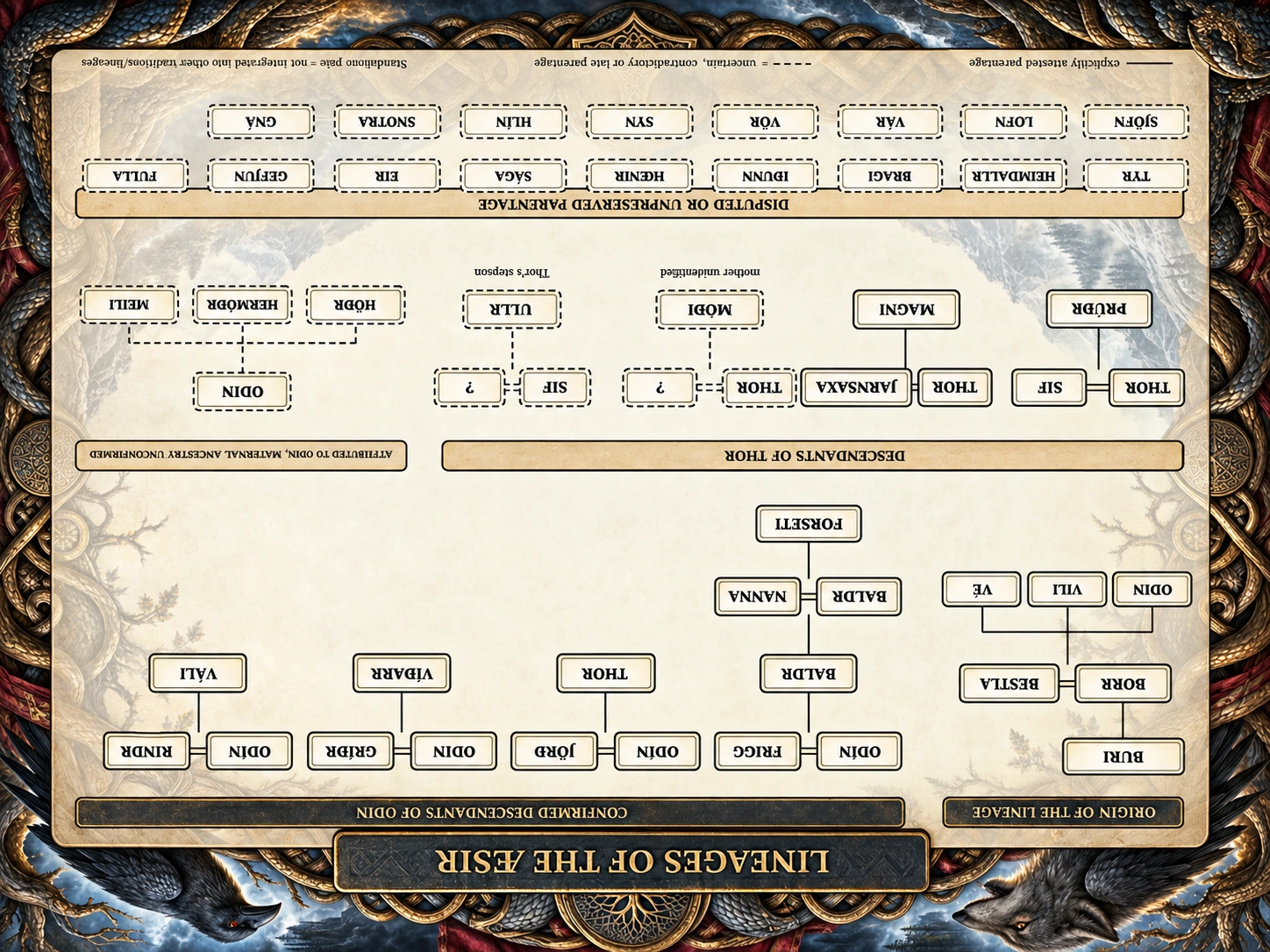
The gods' genealogy is deeply entwined with that of the jötnar, the giants. Odin is the son of Bestla, who belongs to the jötunn lineage. Thor is the son of Jörð, the personification of Earth, who is also connected to that ancient line. Magni is born to Thor and the jötunn Járnsaxa.
The very beings the Æsir fight may also be their mothers, wives, lovers, allies or ancestors.
That is why the opposition between gods and giants is far more complex than a war between good and evil.
The jötnar often embody ancient, wild or destructive forces that threaten the order established by the gods. Yet they also possess wisdom, magic and knowledge that the Æsir themselves seek. Odin consults giants to uncover secrets. Thor fights them repeatedly. Other gods join with them and have children.
Conflict and kinship exist side by side.
The Æsir and the Vanir
A new alliance was born from a war among the gods.
The Æsir are not the only divine family.
The Vanir, most notably Njörðr, Freyr and Freyja, form another important group of deities, especially associated with fertility, prosperity, nature and certain forms of magic.
Ancient traditions recall a war between the Æsir and the Vanir.
Neither side secures a decisive victory.
At last they make peace and exchange members as a pledge of their agreement. Njörðr, Freyr and Freyja come to live among the Æsir, while other figures travel in the opposite direction.
The reconciliation changes both groups.
Freyja brings knowledge of seiðr to the Æsir, a form of magic that Odin himself will eventually practise.
From then on, it is difficult to imagine their worlds as wholly separate traditions.
First they were enemies.
Then they exchanged gods, knowledge and customs.
In time, their stories became intertwined.
Defenders of a doomed world
They know how it ends. They keep fighting all the same.
The Æsir uphold the order of the cosmos against many threats.
Thor constantly travels into hostile lands to face giants and monsters.
Týr sacrifices his hand so that Fenrir can be bound.
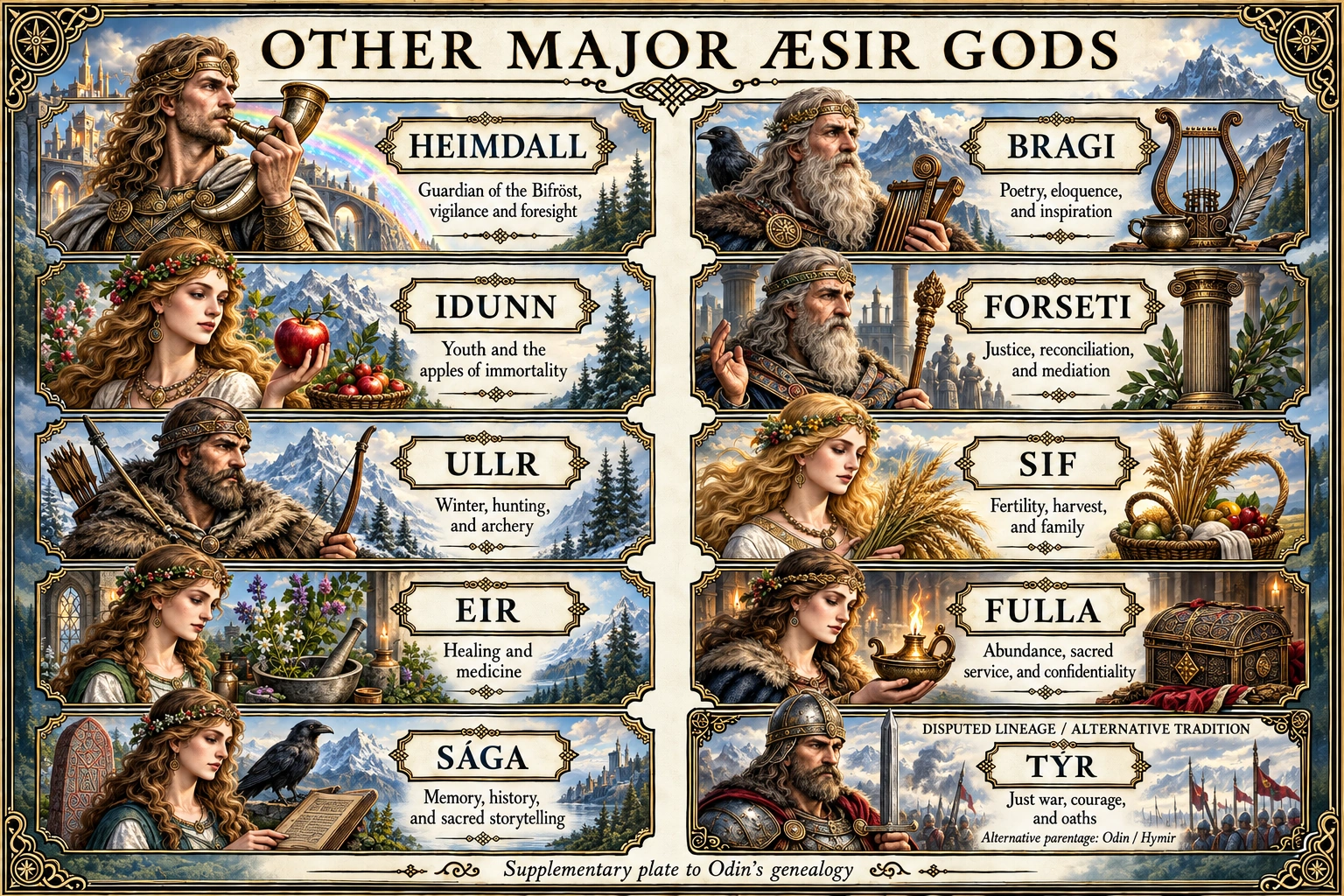
Heimdall watches over Bifröst.
Odin gathers knowledge, seeks out prophecies and brings fallen warriors to Valhalla.
In one way or another, they all know that this order has an end.
Ragnarök
The end of the gods. The beginning of another world.
Fenrir will break his bonds.
Jörmungandr will rise from the oceans.
The gods' enemies will advance.
Fenrir will devour Odin.
Thor will kill the Midgard Serpent and die from its venom.
Týr will fall to Garmr.
Heimdall and Loki will kill one another.
The world the Æsir defended for generations will be destroyed.
Yet Ragnarök does not mean that everything disappears.
Víðarr and Váli will survive. Magni and Móði will inherit Mjölnir. Baldr and Höðr will return.
The Earth will rise again.
Another world will begin.
This tension between order and chaos, knowledge and fate, destruction and renewal runs through many of the Æsir's stories.
Their gods know the prophecies of their own end.
And still they keep fighting.
A deeply imperfect family of gods
Powerful, vulnerable and bound by fate.
The Æsir are neither omnipotent nor morally perfect.
They make mistakes.
They feel fear.
They break agreements, use deception, seek revenge, desire what belongs to others and make choices whose consequences pursue them.
They also love, protect, make sacrifices, keep oaths and fight knowing they may die.
That imperfection is one of the most powerful features of Norse mythology.
The gods grow old if they lose Iðunn's apples.
They can be wounded.
They can be deceived.
They can die.
Even Odin, after sacrificing so much to learn the future, cannot escape Fenrir.
The Æsir possess extraordinary power.
Absolute immortality was never part of it.
Each deity in this index opens a different part of that world: from Odin's relentless search for knowledge and Thor's protective strength to Víðarr's silence, Baldr's tragedy, Ullr's winter precision, and the generation of Magni and Móði, destined to witness whatever comes after the end.