← Æsir index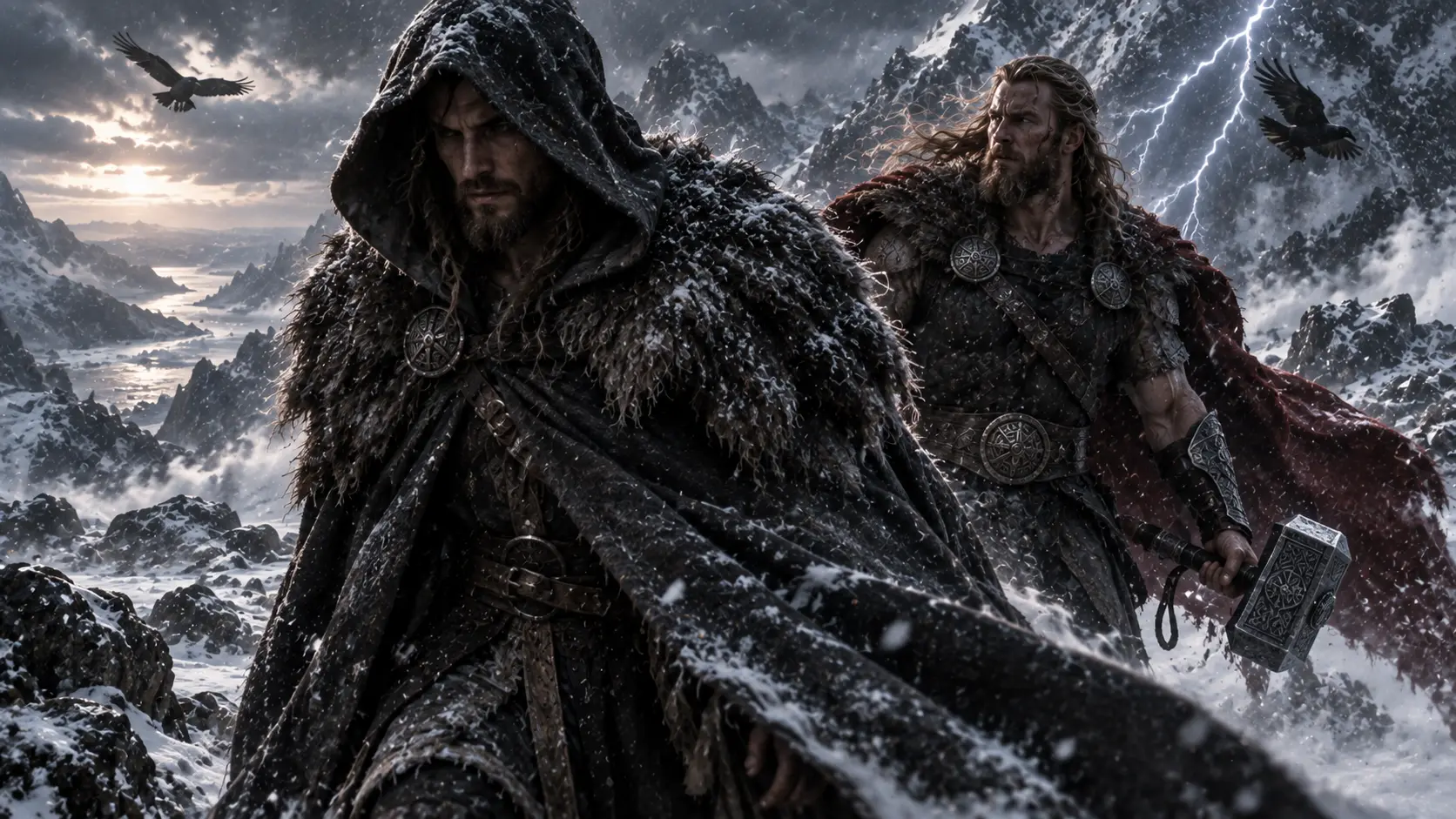
Meili is one of the most enigmatic figures among the Æsir. Medieval sources identify him as Odin’s son and Thor’s brother, but almost everything else has vanished. We know neither his powers, weapons or exploits, nor his mother or his role among the gods. Yet his name survived. It shows how much mythological material lies beyond the Eddas and how heavily we rely on fragments to reconstruct ancient Scandinavian religion. Only a shadow of Meili remains, beside two extraordinary names: Odin and Thor. The clearest statement of his parentage comes from the tradition recorded by Snorri Sturluson, who lists Meili among Odin’s sons. Different sources also name Baldr, Höðr, Víðarr, Váli and Thor. Some have whole cycles of stories, while others survive in a handful of references. Meili belongs to the latter group. Knowing his father tells us little about his mother. Thor is the son of Odin and Jörð, so it is tempting to make Jörð Meili’s mother as well. Yet brothers need not share both parents. Both are sons of Odin, and the surviving sources leave Meili’s mother unknown. In the Eddic poem Hárbarðsljóð, Thor comes to a strait and needs a ferryman to take him across. The ferryman is Hárbarðr, commonly understood to be Odin in disguise. Instead of helping Thor, he draws him into a long exchange of insults, provocations and boasts about their deeds. Thor introduces himself by his lineage. He is Odin’s son, Magni’s father and Meili’s brother. Thor could have invoked Mjölnir, his battles with giants, Sif or Odin. Instead, Meili is among the names he uses to establish his identity. A genealogical reference works when the audience understands it. The name may sound almost empty today, but Meili may once have been far more recognisable. The kinship survives. The stories that made it matter have been lost. Odin comes before Thor. Magni comes after him. Meili stands beside him. Father, brother, son: Thor places himself within a divine genealogy, and Meili occupies the same generation. We know a great deal about the father and the brother, and even a major story about the son. The figure among them has almost entirely disappeared. Meili appears indirectly in Haustlöng, a skaldic poem attributed to Þjóðólfr of Hvinir that preserves a story involving Thor and the giant Þjazi. Skalds used kennings, poetic expressions that identified a person through kinship, attributes or imagery. Here Thor can be called Meili’s brother. The reference gives us no adventure of Meili’s own. His name serves to identify Thor. Thor is one of the best-known gods of the Germanic world. His name occurs in poems, myths, inscriptions, place names and personal names. Mjölnir became a major Scandinavian religious symbol. Yet a poet could identify him as “Meili’s brother.” The name carried enough cultural weight for the audience to recognise it. We have the formula, but much of the knowledge that made it natural is gone. Snorri also preserves Meili’s name in Skáldskaparmál. This part of the Prose Edda gathers names, genealogies and expressions from the skaldic tradition. It records Thor’s kinship with Meili and lists Meili among Odin’s sons. These brief references establish his place in Odin’s lineage and his relationship with Thor. Beyond them, the sources fall silent. The Eddas preserve medieval manuscript witnesses to a much larger tradition. Countless stories circulated orally before they were written down. Some survive, some were reduced to fragments and some vanished. A name in a poem can be the trace of a story we can no longer tell. Meili belongs to that lost world. Meili may have appeared alongside Thor, had adventures of his own, held a religious role familiar to early Scandinavians or been a minor figure even then. The evidence does not settle any of these possibilities. A complete biography built from a few mentions would pass modern reconstruction off as ancient tradition. The gaps are part of his historical identity. Modern interpretations have associated him with journeys, roads, nature, movement and the protection of travellers. They draw on proposed meanings of his name, associations in context or the desire to give every god a defined sphere. The surviving medieval sources provide insufficient grounds for calling him a god of travel or assigning him those other domains. The mystery is what distinguishes him. Suggestions have linked Meili to meanings such as “dear,” “kind” or “pleasant.” The etymology remains disputed. Even a correct interpretation would leave open how storytellers understood the name, and would not establish a personality or religious role. The sources mention no weapon distinctive to Meili. Objects are central to the identities of Thor, Odin, Freyr and Heimdall. In Meili’s case we lack information, even about whether he carried a weapon at all. Giving him a sword, spear or bow would be a modern artistic choice. A glossary should keep that gap visible. Meili belongs to the Æsir, but the sources name no powers of his own. There is no basis for giving him Thor’s storms, Odin’s poetry and knowledge, Heimdall’s supernatural vigilance or the prophetic gifts of other figures. His divine identity is attested through genealogy and tradition. Any specialisation he may have had is lost. Major Norse gods left traces in place names, personal names, objects, amulets, literary references and descriptions of rituals. The evidence for Meili is too limited to describe a religious practice dedicated to him. A cult may have existed, but the sources do not establish one. The sources tell how Fenrir devours Odin, Thor kills Jörmungandr and dies from his venom, Týr and Garmr kill each other, Heimdall and Loki do the same, and Freyr falls to Surtr. Víðarr, Váli, Magni and Móði survive. Baldr and Höðr return. Meili’s fate is unknown. He could have died, survived or disappeared from the tradition before the Ragnarök stories took their surviving forms. Any specific fate would be speculation. Thor has a wife, children, enemies, animals, weapons, magical objects, a home, journeys, battles, an appointed enemy and a foretold death. For Meili, one relationship runs through the sources: he is Thor’s brother. It must have been familiar enough for a poet to turn it around. In ancient poetry Thor is also the brother of Meili. Norse mythology reaches us in remnants: poems preserved in particular manuscripts, fragments, skaldic references, genealogies and accounts recorded centuries after many traditions began to circulate. The absence of a story about Meili means it did not reach us. Whether it ever existed is a different question. Týr puts his hand in Fenrir’s jaws. Thor fishes for Jörmungandr. Odin sacrifices his eye. Heimdall blows Gjallarhorn. Baldr is struck by mistletoe. Víðarr avenges his father. Meili survives through something more fragile: a phrase, a genealogy, a kenning, the name of a brother spoken by Thor. Someone once understood at once what “Meili’s brother” meant. That person is gone. The stories are gone too. The name survived. In 1931: El Lobo y la Nieve, Meili’s incomplete mythology can remind Thorvald of the distance between memory and truth. A name carved in stone, preserved in a poem or passed down through generations can show that someone existed in a tradition without telling us who they were. In a world where lineages, knowledge and memories have endured persecution, wars and secrets, some stories survive whole, others in fragments, and others become a name that shows a story is missing. We know of Meili because people in the past still knew who he was. What we have lost is what they knew.
Meili
Son of Odin
Was Jörð his mother?
Thor’s brother
“Meili’s brother”
Thor between Odin, Meili and Magni
Haustlöng
When a familiar god is identified through a lost one
Skáldskaparmál
The problem of lost stories
Did Meili have myths of his own?
A god of travel?
The meaning of his name
Did he have weapons?
Did he have powers?
Was there a cult of Meili?
Ragnarök
The absent brother
What Meili reveals about the Eddas
A name that outlived its story
Meili in the world of 1931
Attributes
Name: Meili.
Nature: One of the Æsir.
Father: Odin.
Brother: Thor.
Mother: Unknown in the surviving sources.
Descendants, dwelling, weapons and associated objects: Unknown.
Divine domains and powers: Unknown.
Cult: Unconfirmed by the surviving sources.
Meaning of the name: Disputed, with suggestions including “dear,” “kind” and “pleasant.”
Fate at Ragnarök: Unknown.
Attested mythological significance: Son of Odin and brother of Thor. His name also identifies Thor through genealogy.
Main sources: Hárbarðsljóð, Haustlöng and Skáldskaparmál.
Distinctive feature: His name survived while most of his tradition disappeared.