← Æsir index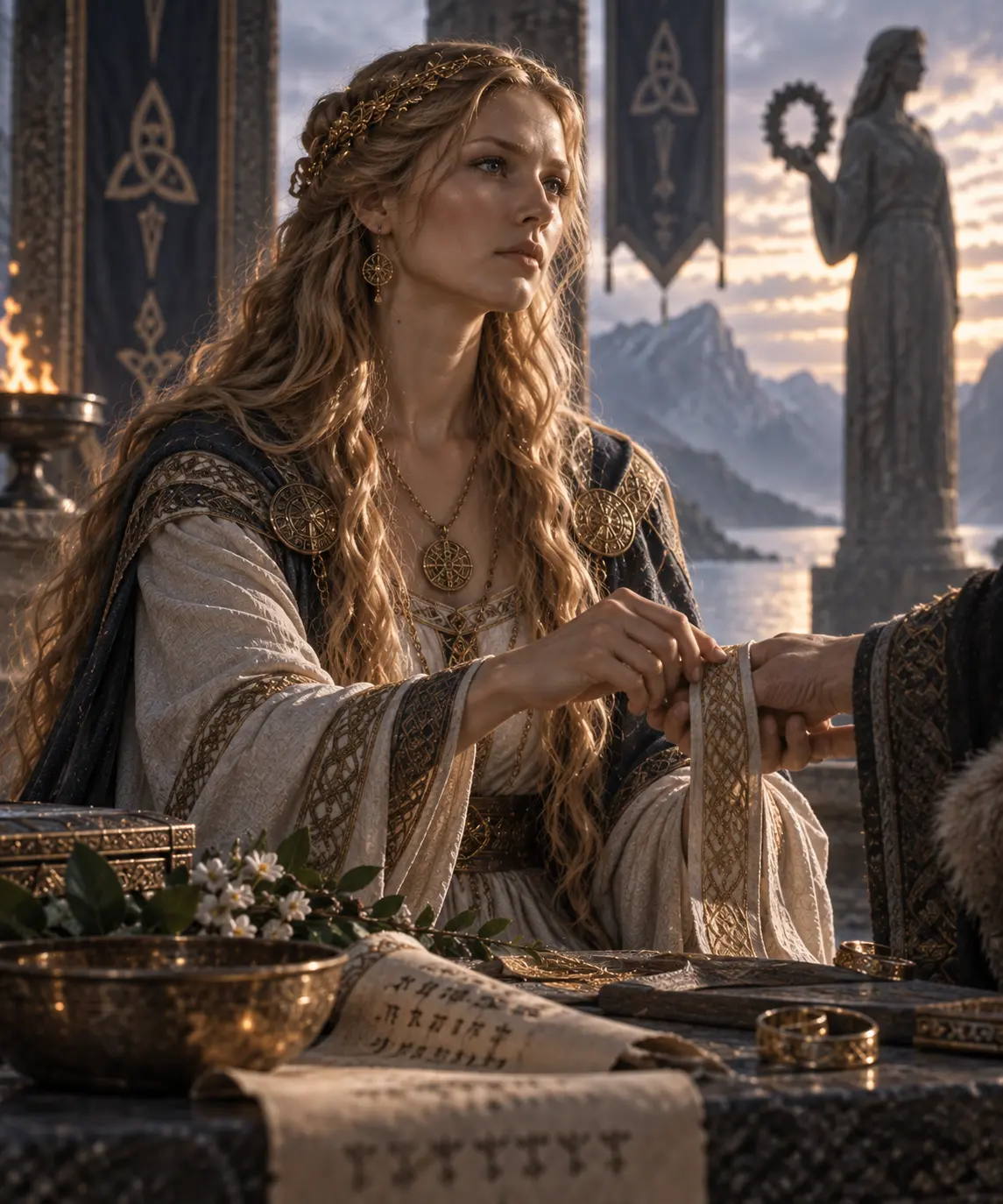
Oaths, agreements and commitments Vár is an ásynja who hears promises made between people, especially between men and women. Snorri Sturluson says she punishes those who break them. She is also invoked in the Poetic Edda, during Þrymr’s wedding to Thor disguised as Freyja. In Gylfaginning, Snorri calls these agreements várar. Vár hears them and punishes those who break them. Marriage is one setting for these commitments, and her role extends to other solemn promises. In Þrymskviða, Þrymr steals Mjölnir and demands Freyja as his bride. She refuses. Thor disguises himself as Freyja, and Loki accompanies him as a maid. The bride’s appetite, thirst and fierce gaze arouse suspicion. Loki explains them by saying she has gone without food or sleep in anticipation of the wedding. Þrymr orders Mjölnir placed on the bride’s knees to consecrate the marriage. The poem invokes Vár to bless the union. The ritual is part of the deception. Once Thor recovers his hammer, he turns it against Þrymr and the giants in the hall. The poem shows that Vár could be invoked at a wedding. Snorri describes a wider responsibility for oaths and agreements. The common element is the binding force of one’s word. Snorri says that Vár takes vengeance on those who break their promises. No surviving story describes a particular punishment, weapon or procedure. Sjöfn turns people’s thoughts toward love. Lofn helps unions that face obstacles. Vár hears the promises people make and is concerned with the consequences of breaking them. No surviving story brings the three together. Týr offers another example of the weight of oaths among the Æsir. Vár is explicitly associated with commitments between people. Snorri connects Vár with várar, the agreements she hears. It is unclear whether his explanation reflects older belief, medieval wordplay or both. Þrymskviða independently attests her place in a wedding ritual. No genealogy, partner, descendants, dwelling, animals or personal objects are known. Gylfaginning describes her function, while Þrymskviða places her in a ritual. Both preserve her connection with binding promises. Group: Ásynjur. Domain: Oaths, agreements and commitments. Characteristic episode: The false wedding of Thor and Þrymr. Ritual object: Mjölnir. Main sources: Þrymskviða in the Poetic Edda and Gylfaginning in the Prose Edda.
Vár