Beneath the streets of Bergen, among ancient Hanseatic wharves, medieval churches, and forgotten passageways, lies a secret older than the gods themselves. In the world of The Roots of the World, the rain that falls upon this Norwegian city does more than descend from the heavens. It carries the memory of a wound opened at the dawn of creation.
Bergen, Where History and Legend Meet
Some cities seem destined to keep secrets. Bergen is one of them.
Nestled between mountains and the sea, Norway's former capital has lived for centuries beneath rain-laden skies, surrounded by mist and the restless murmur of ships entering its harbour. Its wooden houses, narrow alleyways, and stone churches preserve the memory of merchants, sailors, kings, and forgotten wars.
To travellers in the twentieth century, Bergen is a picturesque gateway to the Norwegian fjords: a city of rain-darkened rooftops, colourful façades, and fishing vessels returning to port beneath an almost perpetually overcast sky.
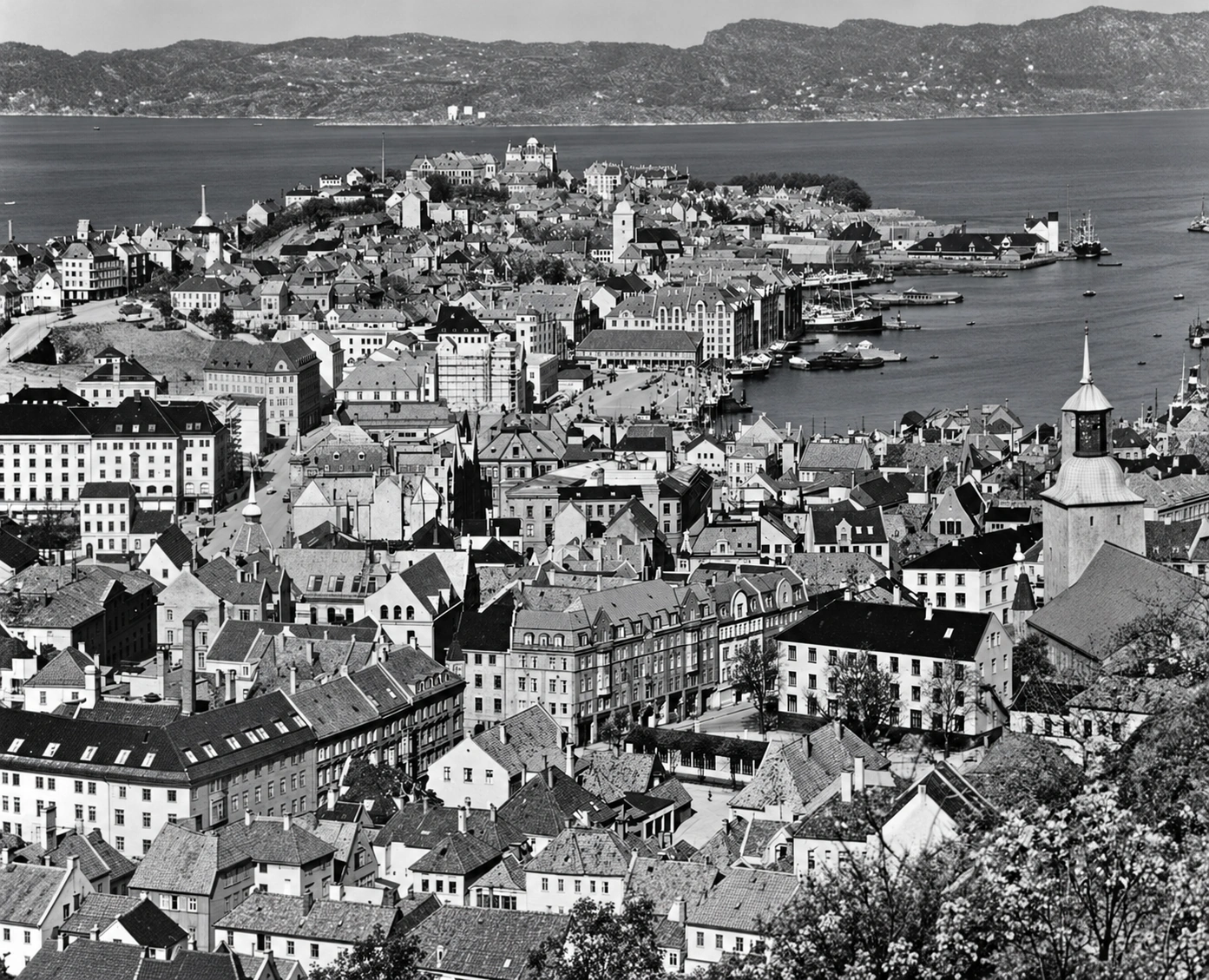
But in The Roots of the World, Bergen is far more than a setting.
Beneath its streets lies a history no medieval chronicler ever recorded. A memory reaching back to a time before humanity existed, when the earth had no name and the gods had only begun to impose their order upon chaos.
Within that distant past lies the origin of a curse that has endured for countless generations and, by 1931, continues to shape the destinies of those who carry the blood of the ancient powers.
For according to the hidden mythology of the saga, Bergen was built upon a single drop of blood belonging to Ymir, the primordial giant.
And that blood never truly died.
1. Ymir: The Death That Gave Birth to the World
Before the kingdoms of men, before temples and cities, the universe was a primordial abyss.
Norse tradition calls it Ginnungagap, the great void between the frozen realm of Niflheim and the fires of Muspelheim.
From the meeting of these opposing forces emerged Ymir, the primordial giant, ancestor of a race so ancient that its existence preceded even the gods who would eventually rule the world.
According to the accounts preserved in the Prose Edda, Odin and his brothers, Vili and Vé, slew Ymir and fashioned the known world from his body.
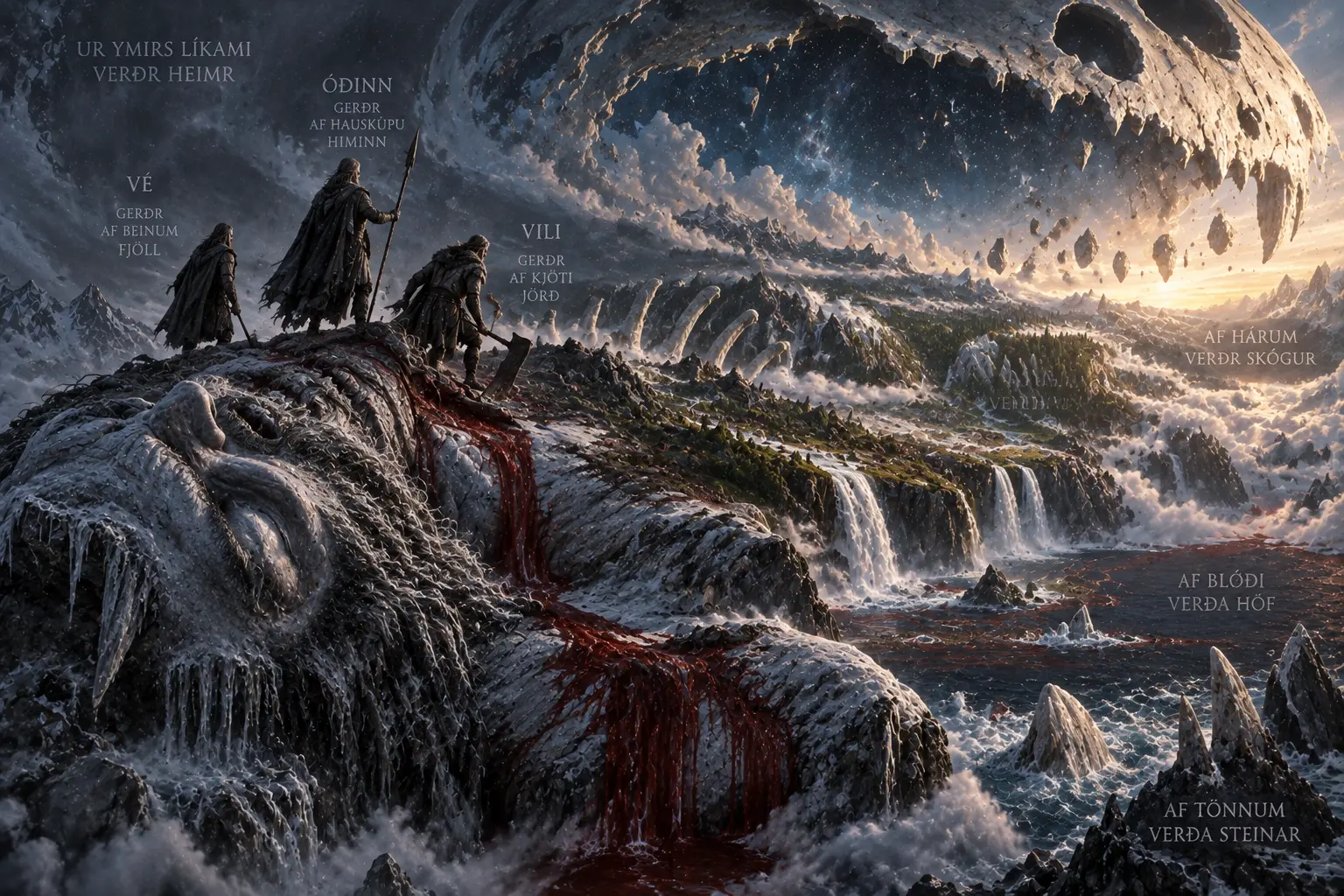
His flesh became the earth.
His bones became the mountains.
His blood became the seas and oceans.
From his skull they formed the vault of heaven, while his hair became the forests that spread across the land.
But creation came at a terrible price.
The blood spilled from the giant's wounds unleashed a flood so immense that almost all his descendants perished beneath its crimson waters.
Only Bergelmir and his wife survived.
And it is here that The Roots of the World introduces one of its deepest secrets.
The Drop That Escaped the Flood
In the mythology of the saga, as Bergelmir fled the destruction of his kind, a single drop of Ymir's primordial blood fell upon the shores of what would, many thousands of years later, become Norway.
It was no ordinary blood.
It retained something of the chaos that had existed before creation: a formless power untouched by the laws the gods had imposed upon the universe.
The drop slowly penetrated the rock. It descended through fissures, caverns, and layers of stone that had never known sunlight, until it became trapped deep beneath the earth.
There it remained.
Centuries passed. Glaciers retreated, forests spread, and human beings established their first settlements.
Yet beneath the stone, that tiny remnant of the world before the gods continued to pulse.
In the saga, Bergen's persistent dampness takes on a supernatural significance. The rain, the mist, and the water seeping between its cobblestones seem to belong to a single ancient memory.
As though the earth were still mourning Ymir's death.
As though something beneath the city were still waiting.
2. Bergelmir: The Survivor of the First World's End
Bergelmir occupies a singular place in Norse mythology.
Where Ymir represents the beginning, Bergelmir embodies survival: the giant who escaped the destruction of his kind and ensured that his lineage would endure.
His story raises a fundamental question: what becomes of those who survive when the victors write the history of the world?
In The Roots of the World, that question carries particular weight.
Creation was not a peaceful act. The birth of divine order was preceded by slaughter, and the world inherited by humanity was built quite literally upon the remains of a primordial being.
Bergelmir is therefore more than a survivor.
He is the witness to an unimaginable loss.
The tears he shed for his fallen kin became, within the saga's mythology, part of a substance still concealed beneath Bergen: the Lake of Sleeping Blood.
A place where the grief of the first giants mingled with Ymir's blood, preserving the memory of a world that had vanished.
The modern city knows nothing of its existence.
But certain bloodlines have never forgotten.
3. Bryggen: The Wharf Where the Past Refuses to Disappear
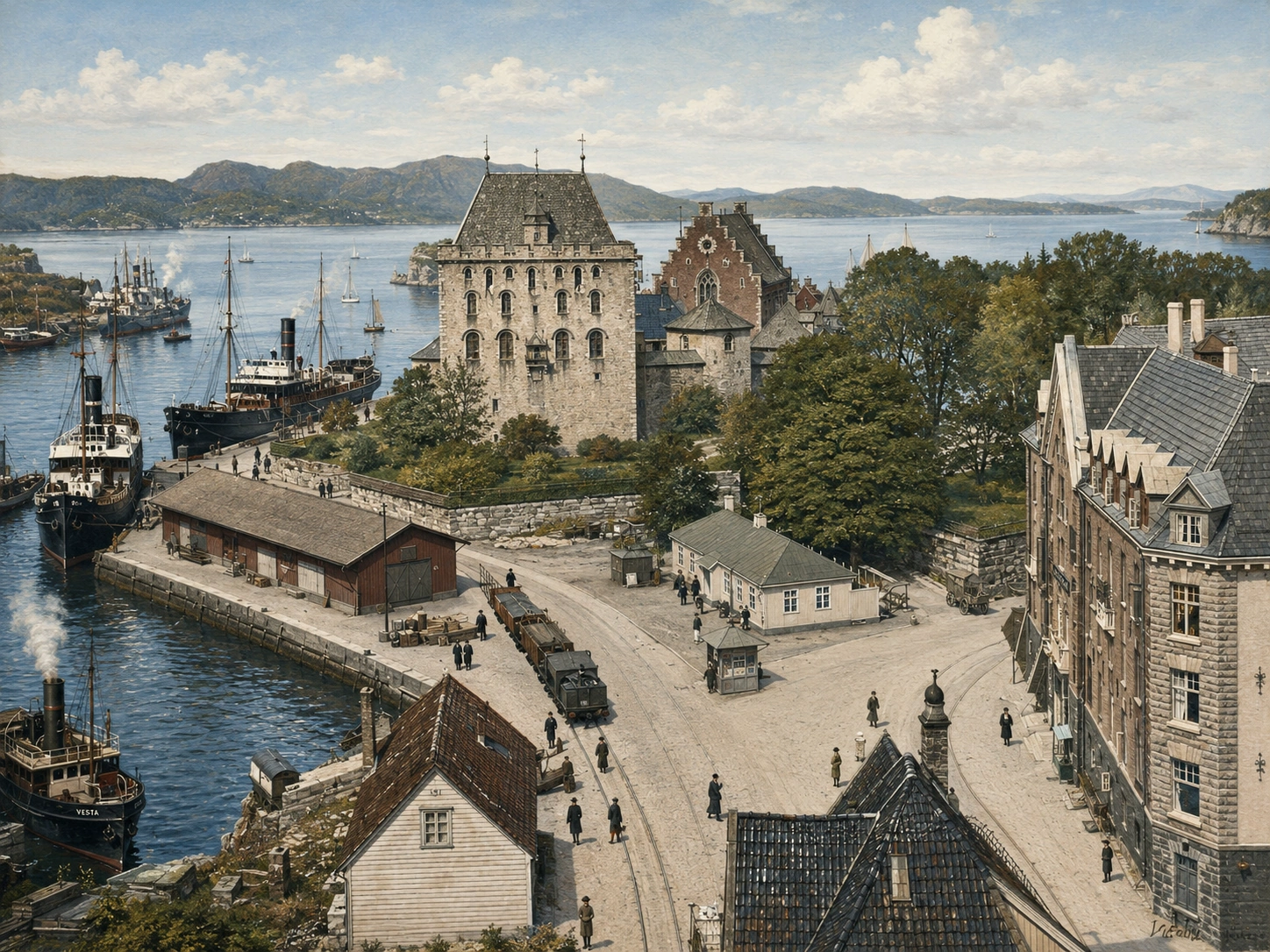
Historical Bergen and its supernatural counterpart meet in Bryggen.
The old Hanseatic quarter is one of Norway's most recognisable landmarks. Its wooden façades, painted red, yellow, and ochre, stand along the harbour as witnesses to an age when northern European merchants controlled much of the maritime trade across the Baltic and North Seas.
For centuries, the smell of dried fish, salt, tar, and damp timber permeated its warehouses.
Behind the façades stretched narrow passages where merchants stored their goods, negotiated prices, and guarded secrets that could be worth as much as a cargo of silver.
In 1931, Bryggen still retained much of that atmosphere.
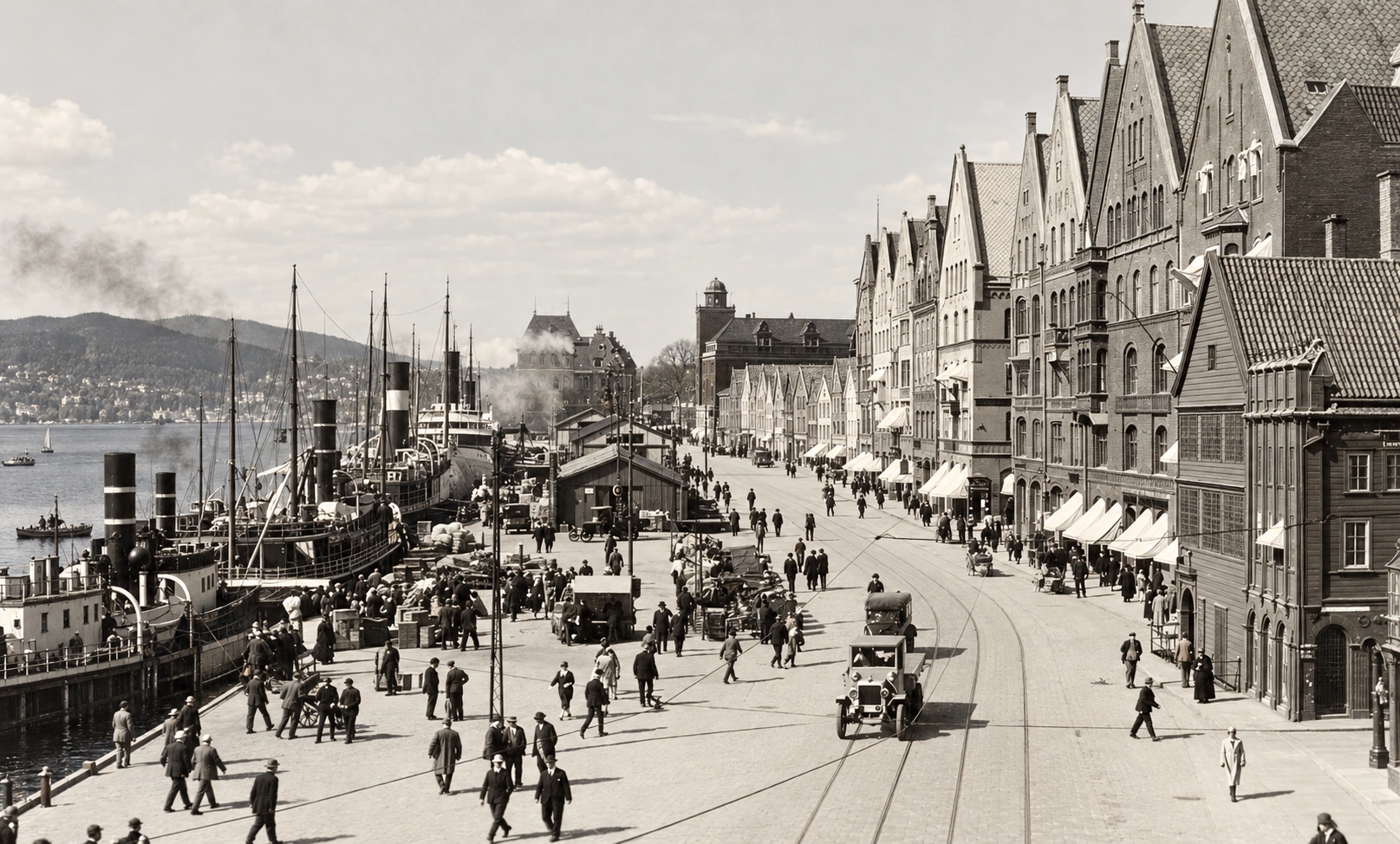
Within the world of the saga, however, its alleyways conceal something that appears on no municipal map.
Where the Veil Between Worlds Grows Thin
Beneath the ancient warehouses, timber rests upon ground saturated by centuries of moisture.
Water seeps between foundations, slips through invisible cracks, and reaches cavities beyond the knowledge of the city's inhabitants.
There, according to the hidden history of The Roots of the World, the boundary separating the human world from the ancient powers grows dangerously thin.
The seeresses of the Vanir bloodlines have understood the significance of such places for generations.
To them, certain locations preserve traces of events that have never entirely faded. The past may reveal itself through a sensation, a dream, or a vision that arrives without warning.
Bryggen thus becomes a threshold between two realities.
Above, merchants unload their cargo, sailors argue in taverns, and children run through the wooden passageways.
Below, the stone guards a memory far older than the city itself.
And those who know how to listen may still hear it.
4. Mariakirken: The Church Built Over a Secret
A short distance from Bryggen stands Mariakirken, St Mary's Church.
It is one of the great surviving monuments of medieval Bergen. Its Romanesque architecture, towers, and thick stone walls recall an age when religion, commerce, and political power were deeply intertwined.
For centuries, the church maintained close ties with the city's German merchant community, eventually becoming known as the German Church.
In recorded history, its walls preserve part of Bergen's religious and commercial heritage.
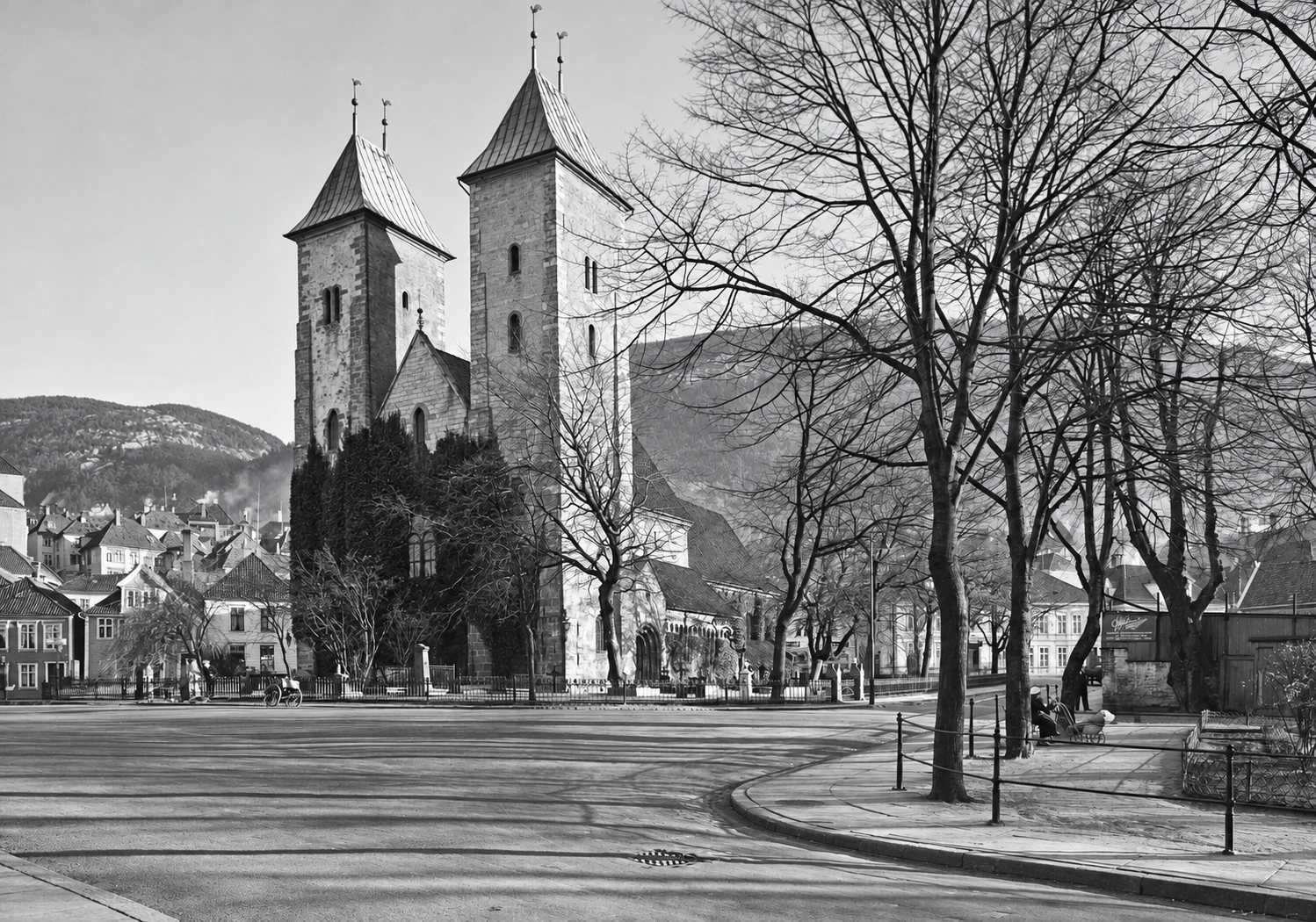
In the fictional world of The Roots of the World, its foundations conceal something far older.
The Symbols Beneath the Stone
The novels imagine a network of underground structures predating the medieval church.
Their corridors bear symbols whose meanings have been lost to most of humanity.
Among them are the figure of a chained wolf and images of women whose hands appear to transform into roots.
They are not mere decorations.
They belong to a tradition connected to primordial forces, supernatural bloodlines, and the memory of Yggdrasil, the great tree that binds the worlds together.
Here, the Christian symbolism of the surface exists alongside a pagan inheritance buried long before the church was built.
The church represents the visible order.
The passageways beneath it preserve what that order could never entirely erase.
And beneath both extends a network of hidden routes leading towards the depths of the ancient royal fortress.
5. Håkon's Hall and the Lake of Sleeping Blood
Bergenhus Fortress preserves some of Norway's most important medieval buildings.
Among them stands Håkonshallen, or Håkon's Hall, the great stone hall constructed during the thirteenth-century reign of King Håkon IV.
Its walls evoke royal feasts, ceremonies, political alliances, and the splendour of a monarchy seeking to consolidate its authority.
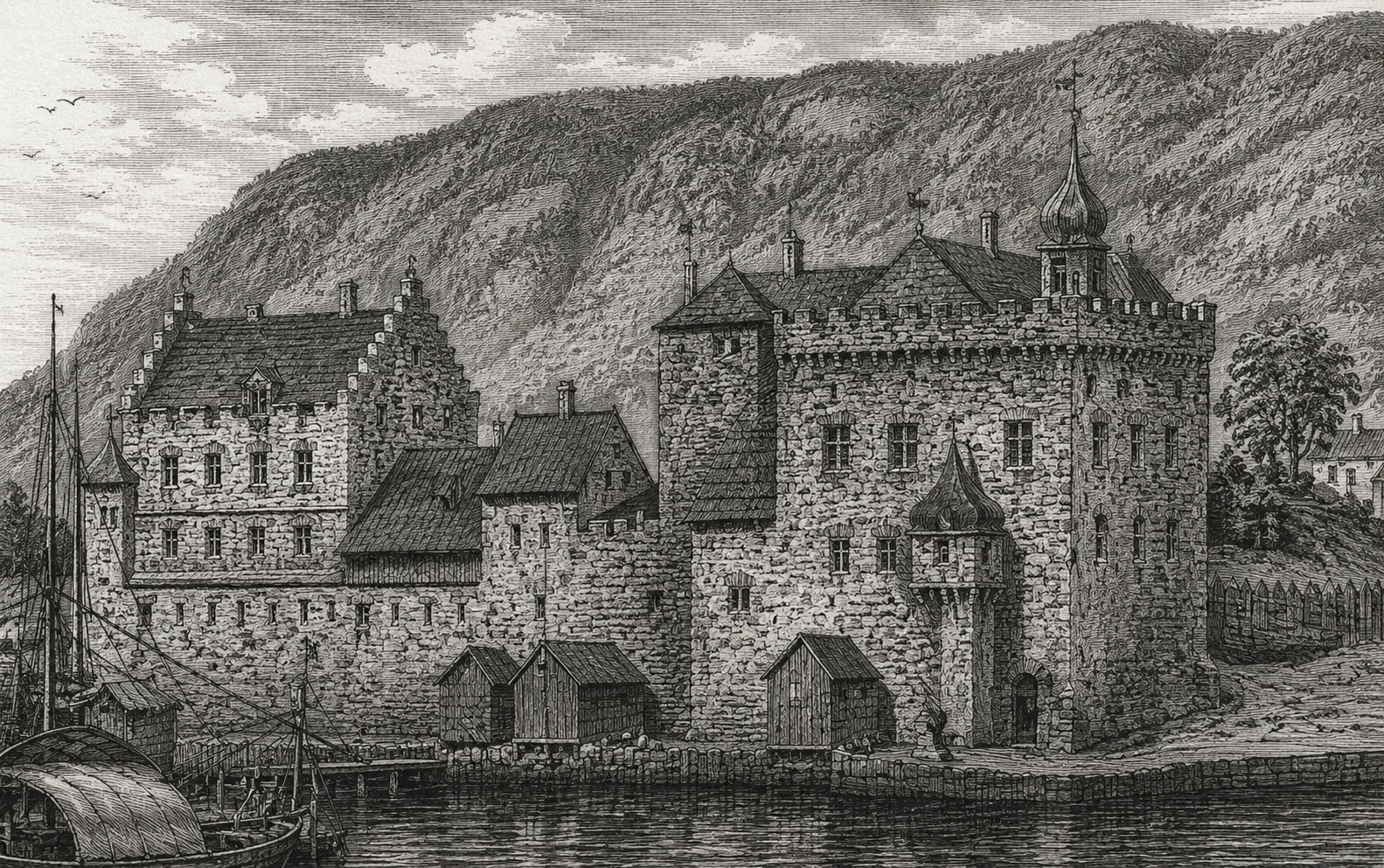
But the fortress of the saga conceals another kingdom beneath its foundations.
A place sunlight has never touched.
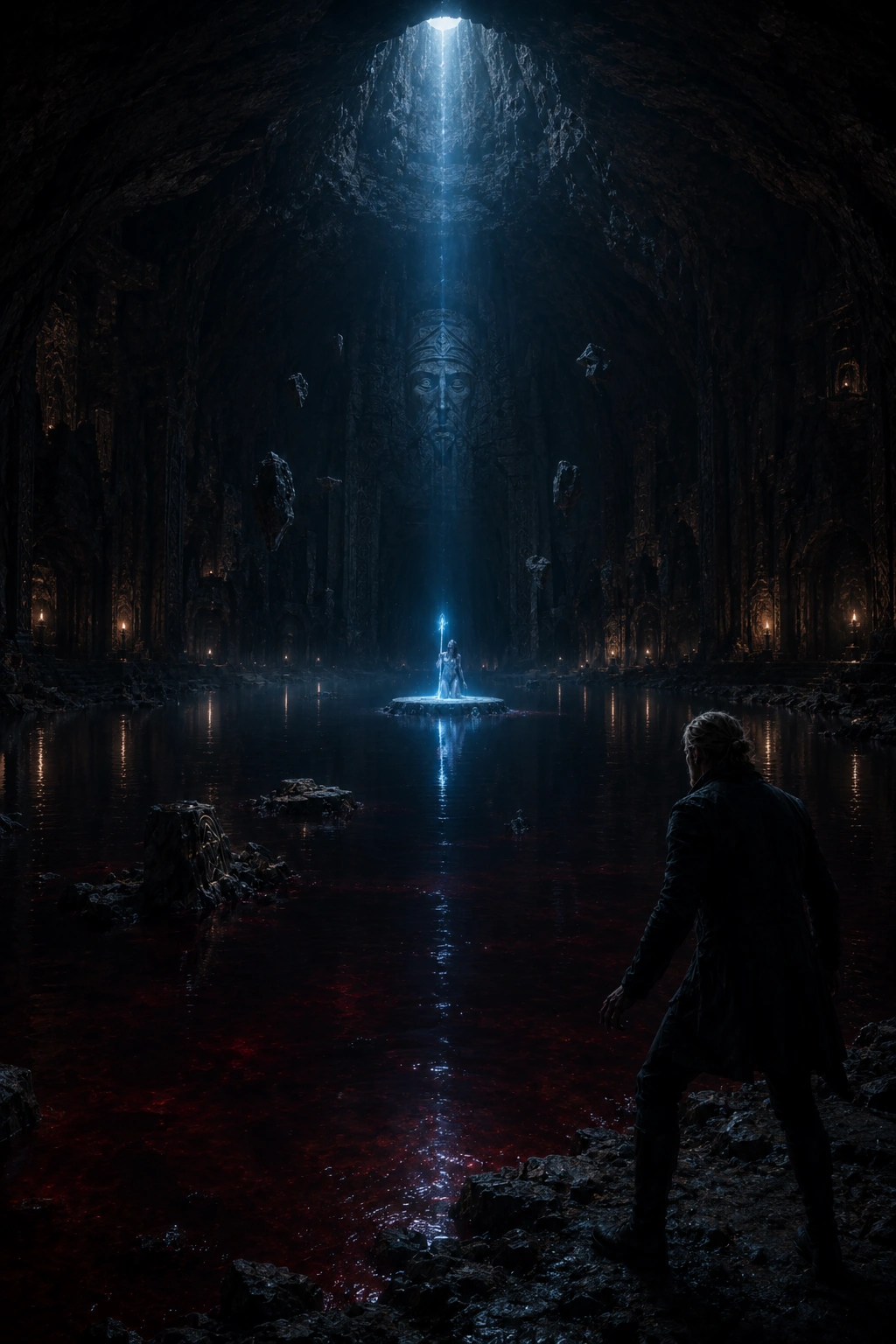
The Lake That Reflects No Faces
At the end of the underground corridors lies a cavern whose existence predates the earliest human settlements.
Within it rests the Lake of Sleeping Blood.
Its surface is dark, dense, and motionless. It reflects neither the cavern walls nor the figures of those who approach its shores.
It resembles liquid obsidian.
According to the saga's hidden traditions, its waters were formed when Bergelmir's tears mingled with the blood of Ymir.
From that union emerged a substance that preserves something of the cosmos's original memory.
Small islands of black stone rise above the surface, engraved with signs belonging to an age before human writing.
The lake is not merely a reservoir of power.
It is a wound in the history of the world.
And not every descendant of the ancient gods can approach it without suffering the consequences.
6. Æsir and Vanir: Two Bloodlines Before the Same Abyss
One of the central conflicts of The Roots of the World unfolds between the descendants of the Æsir and the Vanir.
Although both bloodlines trace their origins to ancient divine powers, their relationship with the Lake of Sleeping Blood is profoundly different.
The Æsir-borinn: The Fear of Losing Control
For the Æsir-borinn associated with the Broderskap, the lake represents a threat.
Its waters contain a force that obeys neither the hierarchies nor the laws they seek to impose.
Contact with that substance can unleash violent visions, impossible memories, and experiences that overwhelm the will of those who endure them.
For this reason, in the saga's secret history, the Æsir-borinn attempted to seal the lake in ancient times.
Their purpose was not merely to prevent others from using its power.
They also feared what it might reveal.
The Vanir-borinn: The Price of Seeing Fate
For the descendants of the Vanir, the lake holds a different meaning.
Its waters can serve as an oracular mirror, an opening into the deepest roots of Yggdrasil and the threads connecting past, present, and future.
But to gaze upon those threads is never without cost.
A völva, a seeress of the ancient Norse tradition, may seek answers about events that have yet to occur, uncover invisible connections between different destinies, or glimpse dangers threatening her family.
Every vision, however, demands a price.
Knowledge can exhaust the body, fracture the will, and leave wounds that no ordinary remedy can heal.
In The Roots of the World, knowing the future does not mean controlling it.
Sometimes, the more clearly a destiny is seen, the harder it becomes to escape.
7. Anna and the Roots of Time
Among the characters bound to this ancient inheritance stands Anna, a powerful völva whose connection to the forces of the Vanir plays an important role in the mythology of the saga.
Her abilities should not be mistaken for limitless magic.
Visions and knowledge of destiny carry consequences, affecting both those who seek them and the people whose lives are bound to their own.
The Lake of Sleeping Blood represents the most dangerous manifestation of this gift: the possibility of looking beyond immediate reality and reaching a memory stretching back to the origins of the world.
But what is the value of foreseeing a terrible event if one lacks the power to prevent it?
And how far would a mother go to protect those she loves?
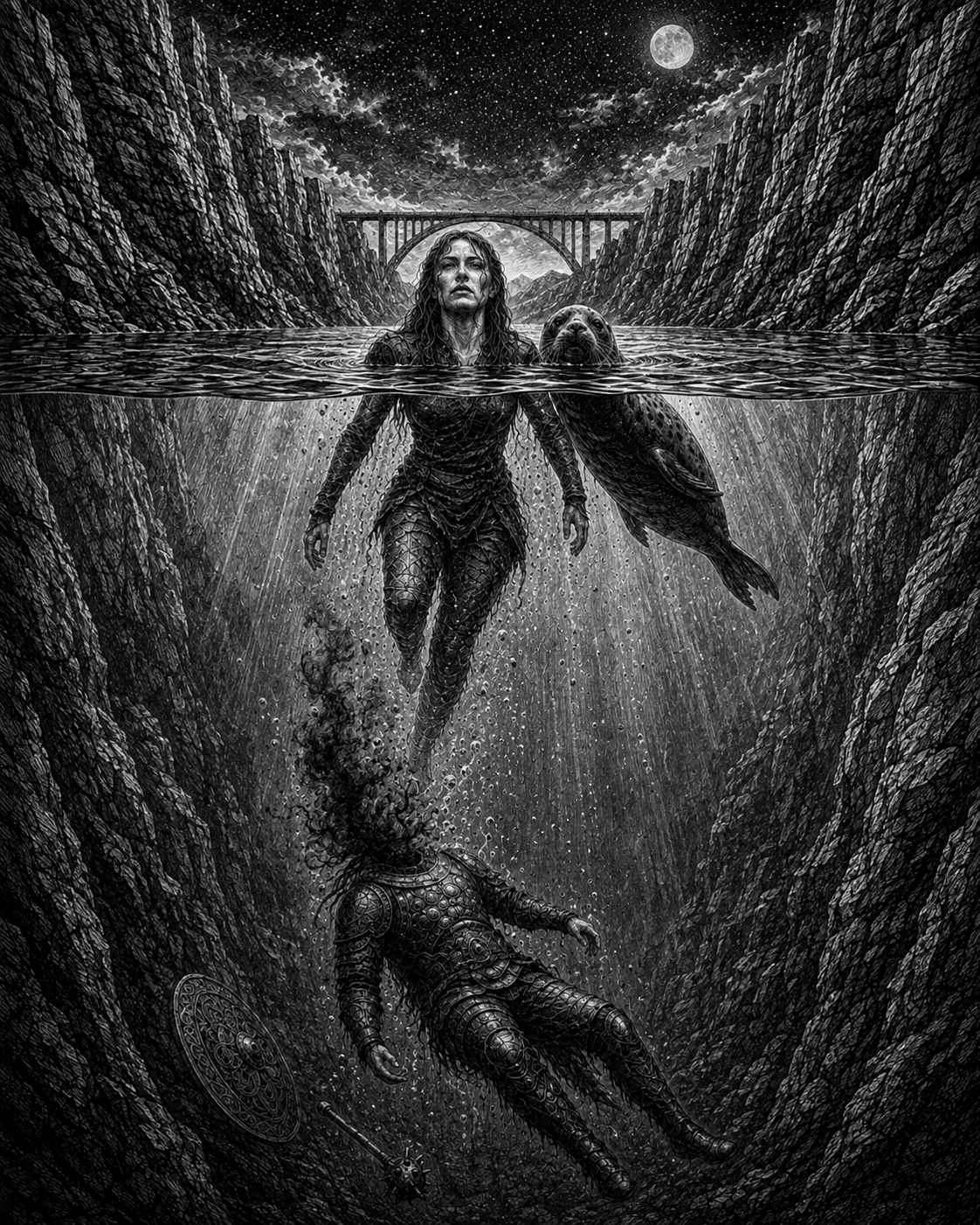
These questions run through Anna's story, linking her fate to the conflicts that divide the families and bloodlines of the saga.
In Bergen, the mythical past ceases to be a collection of ancient legends.
It becomes a force capable of shaping human decisions.
8. Bergen in 1931: A City Between Two Worlds
Bergen offers the saga a setting in which two seemingly incompatible realities can coexist.
On one side stands interwar Europe.
A society marked by the aftermath of the First World War, economic instability, political tensions, and the transformation of long-established social structures.
On the other lies a supernatural conflict that began long before modern nations existed.
Along Bergen's wharves, ships continue to enter and leave the harbour. Merchants negotiate, workers search for employment, and everyday life carries on beneath the persistent rain.
Nothing suggests that remnants of the universe's creation survive beneath those streets.
And yet this is precisely the essence of The Roots of the World.
Recorded history and hidden history unfold side by side.
The political upheavals of the twentieth century do not bring an end to the ancient rivalries between divine bloodlines. Nor do inherited powers and prophecies spare their bearers the grief, contradictions, and difficult choices of ordinary human life.
In this saga, magic does not replace history.
It hides within it.
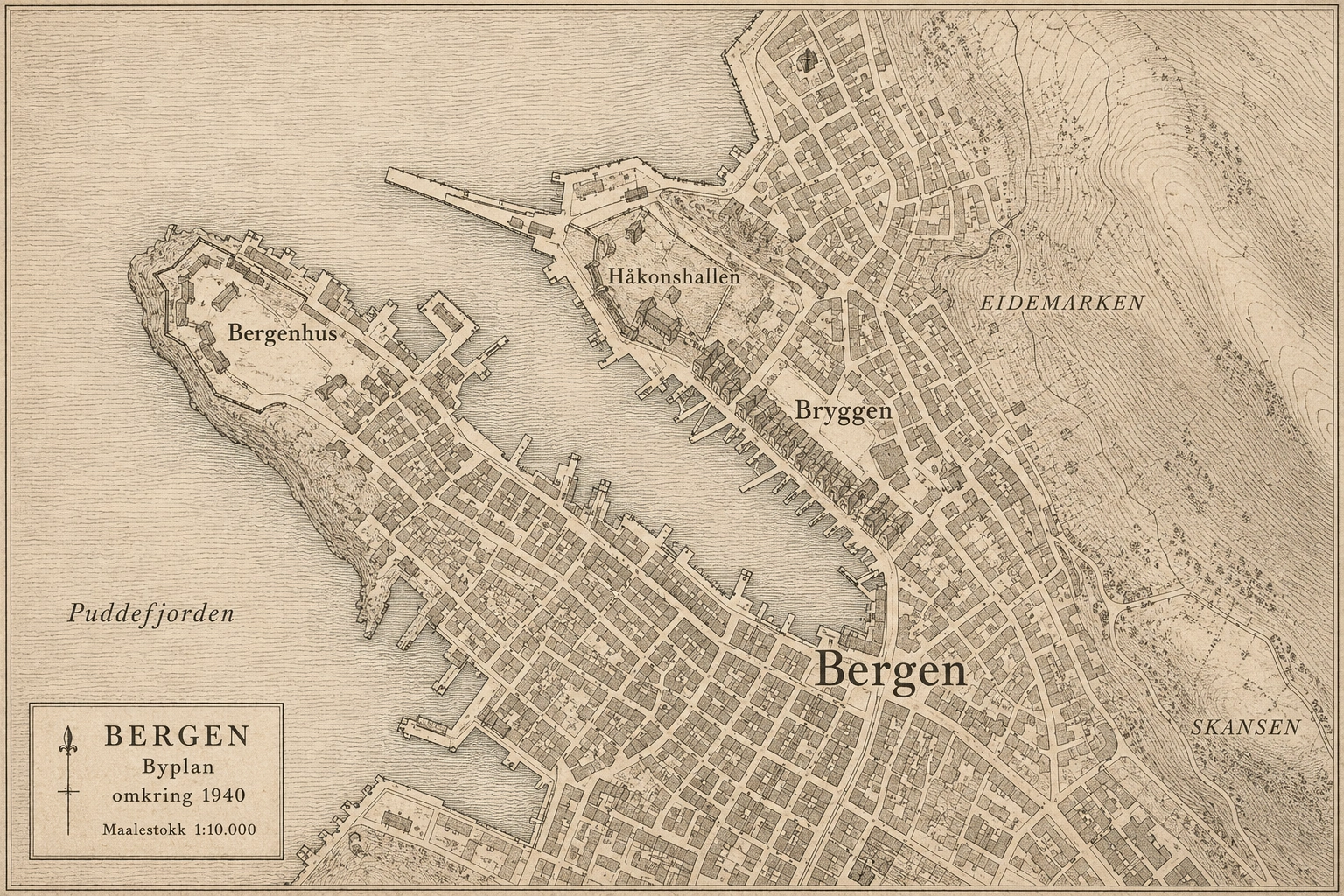
9. The Real Places That Inspired the Saga's Bergen
Bergen's geography plays a fundamental role in shaping the novels' atmosphere.
Bryggen, with its warehouses and wooden passageways, represents the boundary between the commercial world of humanity and the secrets concealed beneath its feet.
Mariakirken embodies the meeting of medieval beliefs and a pagan memory that the novels imagine buried beneath its foundations.
Bergenhus and Håkonshallen bring the weight of Norwegian monarchy and history to the setting, while also serving as a fictional gateway to the depths of the Lake of Sleeping Blood.
Nøstet and Puddefjorden extend this landscape towards the maritime neighbourhoods and waters where wind, mist, and harbour life have long been inseparable from the city's identity.
All these places are real.
Their connections to primordial giants, secret tunnels, and supernatural forces belong to the fictional universe of the saga.
It is precisely this combination that transforms a journey through Bergen into a literary experience: recognising a real street and wondering what might lie hidden behind its walls.
10. The Rain That Remembers Creation
There is one image that captures the Bergen of The Roots of the World.
Rain falls upon the rooftops of Bryggen.
It runs down wooden façades, gathers between the cobblestones, and slowly disappears into the cracks beneath the streets.
The inhabitants hurry along beneath their coats. Ships creak against the wharves. Church bells carry through the mist.
To them, it is an ordinary afternoon.
But far beneath the city, in a place no ray of sunlight has ever reached, the Lake of Sleeping Blood remains motionless.
Its waters preserve the memory of a giant murdered before humanity existed.
And somewhere in Europe, the descendants of those ancient powers continue to struggle over secrets that could alter the destinies of their families.
For in The Roots of the World, the gods have not entirely disappeared.
Their blood still flows.
Their conflicts continue to shape the future.
And some cities, like Bergen, were built upon the very things the world chose to forget.
Discover the Secrets of The Roots of the World
The history of Bergen, the legacy of the Vanir, and the conflicts surrounding Max, Anna, and Thorvald form part of the world of The Roots of the World.
Explore the first two instalments of the saga:
The Wolf and the Snow (El Lobo y la Nieve) — A story of survival, ancient rivalries, and destinies shaped by the weight of the past.
The Blood of the Vanir (La Sangre de los Vanir) — A journey into the inheritance of divine bloodlines, their secrets, and the price of the powers that survive among humankind.
Some histories are written by men. Others are preserved by the earth, even when no one dares remember them.